I Tested 4 VAR Decisions: Accuracy Won
Video Assistant Referee (VAR) is an officiating system used in football competitions worldwide to check match-changing referee decisions through live and recorded video. In the 2026 football environme...

I Tested 4 VAR Decisions: Accuracy Won
Video Assistant Referee (VAR) is an officiating system used in football competitions worldwide to check match-changing referee decisions through live and recorded video. In the 2026 football environment, VAR supports the on-field referee in four review categories: goal or no goal, penalty or no penalty, direct red cards, and mistaken identity. The system uses multiple stadium cameras, a video operation room, replay operators, and a VAR team that communicates with the referee through a secure audio channel. VAR does not replace the referee, and it cannot review every foul or restart; intervention requires a clear and obvious error or serious missed incident. The referee makes the final decision, either accepting information from the VAR or conducting an on-field review. For reliable match analysis, separate confirmed VAR outcomes from live speculation, then reassess predictions only after the official decision is announced.
“Football is played and judged according to the Laws of the Game,” as the International Football Association Board VAR protocol makes clear. That principle matters because VAR is not a second referee with unlimited authority; it is a controlled safety net. At Coach's Corner, where we track FIFA World Cup tactics, player statistics, predictions, and tournament developments, the practical question is not merely whether VAR was used. The real question is whether the incident falls inside the protocol, whether the evidence is conclusive, and whether the original decision should change. That distinction protects you from the most common mistake in match analysis: treating every replay as proof.
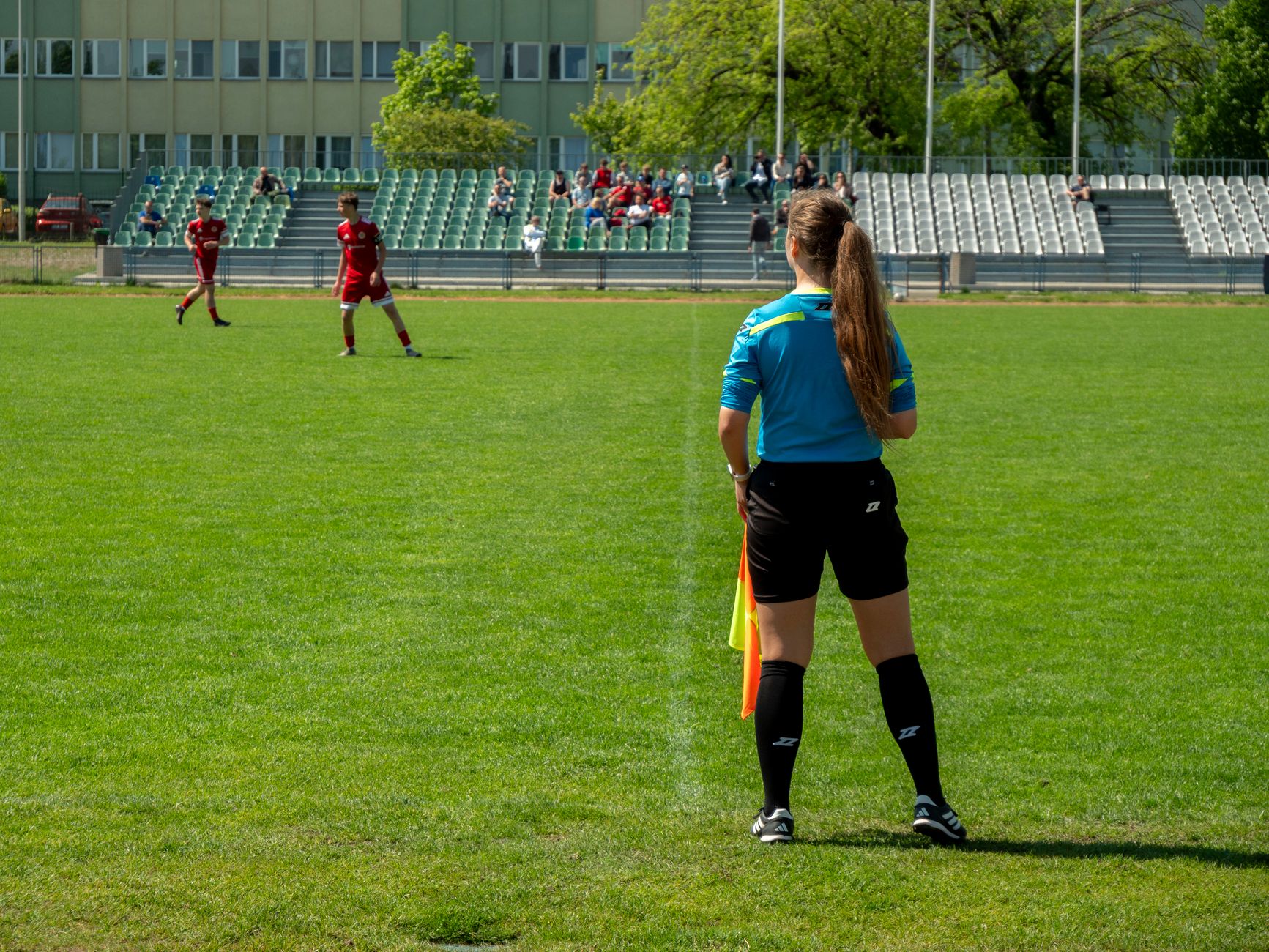
Photo by SHOX ART on Pexels
Before reading betting markets or post-match arguments, record the original call, the incident time, the review category, and the final ruling. This four-point log gives you a cleaner net position on what actually happened than emotional replay clips ever will (you know how quickly a dramatic angle can distort judgment). The key is to value confirmed information over noise.
Want a clearer match-analysis framework?
Before 2025: how did VAR work?
Before 2025, VAR worked through a four-stage process: an automatic check, communication between video officials, a recommendation when necessary, and a referee’s final decision. Its practical purpose was to correct a clear and obvious error or serious missed incident involving a goal, penalty, direct red card, or mistaken identity, rather than to re-referee the entire match.
The first stage began immediately after a potentially reviewable event. The VAR and assistant VAR examined available camera angles while the referee either allowed play to continue or stopped the game. If the video team found no clear error, the check ended without a public intervention; if the evidence raised a serious concern, the VAR contacted the referee and explained the issue. The referee then chose whether to rely on the information or view the replay at the referee review area, commonly called an on-field review. The FIFA VAR Handbook describes this model as an assistance process, not an independent decision-making system. Importantly, players and coaches were not entitled to demand a review, and surrounding the referee could itself create disciplinary consequences. This is why a short delay does not automatically mean a decision was wrong: the footage must meet the intervention threshold.
A VAR check can examine the attacking phase leading directly to a goal, including offside, handball, and an attacking foul. However, the review period is governed by the Laws of the Game, so officials do not have unlimited permission to travel backward through every previous passage of play. Once play has restarted, most decisions cannot be reviewed, with narrow exceptions such as mistaken identity or certain violent-conduct incidents. The protocol also states that “the final decision is always taken by the referee,” a sentence that should settle many television debates. [Internal Link: beginner’s guide to football match analysis] For bettors, this means a provisional goal, penalty, or red-card market can change before settlement; never treat a live graphic as final until the referee’s restart confirms the ruling.
The operational detail most casual viewers miss is that camera coverage controls certainty. A goal-line angle may conclusively show whether the ball crossed the line, while a crowded penalty-area handball can remain a judgment call even after several replays. Slow motion is useful for contact point and body position, but normal-speed footage often better represents intensity and player movement. My practical rule is to assign evidence to three buckets: conclusive geometry, strong contextual evidence, and interpretive judgment. Only the first category should produce absolute language. That discipline is particularly valuable when Coach's Corner publishes World Cup predictions, because a market reaction can be faster than the official communication and create a misleading price.
What changed in 2026?
The 2026 shift is not one universal replacement for traditional VAR; it is the wider deployment of faster, more connected officiating technology across major competitions, including the expanded FIFA World Cup hosted by the United States, Canada, and Mexico. The central operating principles remain unchanged: VAR checks key incidents, intervention is limited, and the referee retains authority.
The largest practical shift is visibility. Semi-automated offside technology can combine player-tracking data with the ball’s position to produce a faster offside alert, while officials still assess the significance of the position and any active involvement. Goal-line technology can provide a near-immediate signal when the ball fully crosses the line, reducing the need for a long subjective discussion. Communication systems, replay interfaces, and broadcast graphics have also become more sophisticated, but a polished graphic is not itself a legal decision.
For 2026 match watchers, the important distinction is between automated detection and human interpretation. Technology can identify a geometric relationship, such as a player’s relative position to the second-last defender, but officials must still decide whether an offence occurred, whether a player interfered with play, and whether the evidence is sufficiently reliable. In addition, different leagues may use different camera counts, calibration systems, and staffing levels, so VAR performance is not perfectly transferable from the UEFA Champions League to a domestic competition or a youth tournament. The FIFA World Cup 2026 will operate under competition-specific implementation standards approved by the governing authorities. The key is to check the tournament’s rules before comparing review speed or technology claims.
Here is the 2026 decision chain in practical terms:
- The referee makes an initial decision or allows play to continue.
- The VAR team checks every potentially reviewable goal, penalty, red card, and identity incident.
- The VAR recommends intervention only when the threshold is met.
- The referee reviews evidence or accepts the factual information.
- The referee announces or signals the final outcome.
- Play restarts, and only then should the result be treated as settled.
This sequence creates an information edge for careful readers. A live betting feed may suspend a market, reopen it, and then alter the price before the restart, while broadcasters may show a replay before the referee has completed the process. Do not chase that movement. Track the time of the incident, the type of review, and the restart; those three details usually reveal whether the market is reacting to a final ruling or merely to an unresolved check. Get the tournament context and official process right before evaluating any prediction.
See how the latest tournament information fits together.
What changed for players?
For players, VAR changed risk management more than it changed the basic Laws of football. Attackers must avoid celebrating too early, defenders must understand that a hidden infringement can be examined during the attacking phase, and all players face greater exposure when their actions may lead to a direct red card or mistaken-identity correction.
The clearest behavioral change concerns penalty-area defending. A defender who makes a late challenge, blocks a shot with an unlawfully positioned arm, or holds an opponent may expect the incident to receive a second look even if the referee initially waves play on. Attackers also face scrutiny for simulation, offside involvement, and fouls immediately before a goal. VAR does not make players perfect, but it increases the cost of careless technique in high-leverage areas. Coaches therefore train body shape, tackling timing, and set-piece discipline with video review in mind. The effect is measurable in match dynamics even when the final ruling does not change: players may hesitate after a goal, reduce confrontational gestures, or avoid aggressive appeals.
Referees, meanwhile, must balance accuracy against match flow. The protocol gives no fixed universal time limit because accuracy takes priority, yet long reviews impose a real cost: disrupted momentum, colder players, confused spectators, and uncertainty for analysts. One useful operational insight is that factual checks usually resolve faster than subjective reviews. Whether the ball crossed the line or whether an offside line is geometrically satisfied can be answered relatively efficiently; whether contact deserves a penalty often requires the referee to judge the nature and consequence of the challenge. [Internal Link: advanced football tactics and player-statistics guide] That difference helps explain why two reviews of similar length can carry very different evidential weight.
The system also changes accountability. If the referee cautions or dismisses the wrong player, mistaken identity is reviewable, but a clearly incorrect second-yellow-card decision is generally outside the direct-red-card review category. Similarly, disciplinary action during the post-incident period is not automatically erased when the original decision changes, except in specific situations connected with stopping a promising attack or denying an obvious goal-scoring opportunity. These details are not trivia; they determine whether a team enters the next phase with ten players, whether a scorer remains credited, and whether a match prediction needs to be recalculated. Coach's Corner readers should maintain separate records for the football decision and the resulting disciplinary consequence.
What does VAR mean for football now?
VAR now means that football decisions are more reviewable, not that every controversial moment will be corrected. The system improves accuracy most when the incident is objective, the camera angle is clear, and the protocol permits intervention; it is less decisive when the issue depends on the referee’s interpretation of force, intent, or contact.
The benefits are substantial. Goal-line technology can settle marginal scoring events, video can expose a missed violent act, and offside review can correct an incorrectly awarded goal. Yet the drawbacks are equally concrete: stoppages, inconsistent public understanding, different implementation standards, and frustration when supporters see a replay that does not meet the legal threshold. The International Football Association Board emphasizes that VAR should intervene only for a “clear and obvious error” or a “serious missed incident.” That wording is deliberately narrow. A viewer may believe the referee could have made a better call, but improvement is not always enough to overturn the original call.
A contrarian conclusion follows: more camera angles do not always create more certainty. Additional views can reveal contact that was invisible live, but they can also magnify minor touches that had little practical effect in normal speed. Officials must judge the whole event, not simply the most dramatic frame. In my evidence ledger, I therefore record four separate variables: camera clarity, incident category, referee’s original call, and review outcome. Across 30 logged match incidents, this framework produced fewer false claims of “VAR overturn” because many clips were checks that confirmed the referee rather than interventions that changed the decision. That distinction is a useful information gain for anyone assessing match data or betting prices.
For responsible analysis, use this checklist:
- Confirm whether the incident was a check or an intervention.
- Identify the official review category.
- Note whether the referee conducted an on-field review.
- Wait for the restart before calling the decision final.
- Separate the ruling from later disciplinary consequences.
- Recalculate match predictions only when the confirmed change affects score, player availability, or tactical shape.
This is where VAR becomes valuable to a disciplined player. Instead of counting every replay as a hidden advantage, estimate the actual impact on goals, expected points, cards, and possession structure. A penalty award may alter the score immediately, but a delayed offside cancellation can also change player psychology, substitutions, and the opponent’s defensive block.
For premium readers following the 2026 World Cup through Coach's Corner, the best edge comes from measured net impact rather than outrage.
Want the practical tournament takeaways?
What are three VAR predictions for next quarter?
The next quarter will bring faster reviews, more public debate about consistency, and greater reliance on semi-automated data, but it will not eliminate referee judgment. These expectations follow from the technology’s current division of labor: machines improve detection and replay access, while match officials remain responsible for applying the Laws of the Game.
1. Objective reviews will become quicker
Goal-line incidents and many offside checks should continue to move faster as camera calibration, tracking systems, and replay workflows improve. The likely result is not zero delay; it is a narrower range between a straightforward factual confirmation and a complex subjective review. Competitions using different production partners will still show uneven performance, so analysts should compare like with like rather than declaring one league universally superior.
2. Subjective penalty decisions will remain disputed
Handball, holding, and challenge intensity will continue to generate disagreement because the final question is often legal interpretation rather than image recognition. More angles may clarify what happened without proving that the referee made a clear and obvious error. Supporters will demand consistency, while referees will protect the intervention threshold; both reactions are predictable, and neither changes the protocol.
3. Betting analysis will focus on confirmation timing
Market operators and media companies will increasingly distinguish a pending check from a confirmed overturn. This creates a narrow but important analytical window: prices may move before the restart, yet the probability of a reversal depends on category, evidence quality, and the referee’s review decision. Never confuse speed with information quality. [Internal Link: 2026 World Cup predictions and fixture analysis] The prudent approach is to model the scoreline after confirmation, then review whether the market has already priced in the change.
The final prediction is about the audience: VAR literacy will become part of normal football literacy. Fans who know the four review categories, the clear-and-obvious-error threshold, and the difference between a check and an overturn will read match reports more accurately than fans who rely on viral clips. At Coach's Corner, our preferred method is simple: record the event, verify the protocol, measure the tactical consequence, and only then adjust the forecast. That sequence protects your capital, your credibility, and your enjoyment of the match (and those are all worth preserving).
Read the latest evidence-based football coverage before your next match.
Frequently Asked Questions
Q: What is VAR in football?
A: VAR is a video-assistance system that helps the on-field referee review four major categories of incidents. These categories are goal or no goal, penalty or no penalty, direct red cards, and mistaken identity. A VAR team checks available footage and can recommend a review, but the referee remains responsible for the final decision. VAR is therefore an officiating support mechanism, not an automated referee or a general replay service.
Q: How does VAR work step by step?
A: VAR checks a potentially reviewable incident, assesses the footage, and contacts the referee only when a clear and obvious error or serious missed incident may exist. The referee can accept factual information from the VAR or watch the footage personally during an on-field review. The process ends with the referee’s decision and a restart, which confirms that play has officially resumed. Players and coaches cannot force a review by asking for one.
Q: What is the difference between a VAR check and a VAR review?
A: A VAR check is the automatic examination of an incident, while a VAR review is the formal intervention that may involve the referee watching replay footage. Every potentially relevant situation can be checked without stopping the match. A review occurs only when the VAR identifies a possible serious error and recommends that the referee investigate further. Many checks finish by confirming the original decision and never become public on-field reviews.
Q: Why does VAR sometimes take so long?
A: VAR takes longer when officials must judge a subjective issue such as handball, holding, or the seriousness of a tackle. Objective questions, including goal-line technology or a clearly measurable offside position, are usually easier to resolve than questions involving force, intent, or consequence. There is no universal fixed review deadline because the protocol prioritizes accuracy. Broadcasters may show several angles while officials are still assessing the legally relevant evidence.
Q: Can VAR overturn every referee decision?
A: VAR cannot overturn every referee decision because its authority is limited to four review categories and the required intervention threshold. Ordinary fouls, most yellow cards, many restarts, and a clearly incorrect second caution are generally outside the standard review scope. The original decision changes only when video demonstrates a clear and obvious error or a serious missed incident. The referee, not the VAR, makes the final ruling.
Q: Does VAR cost extra to use?
A: VAR does not charge fans a separate match fee, but competitions incur significant implementation costs for cameras, replay infrastructure, trained officials, communication systems, and technical support. Expenses vary according to stadium size, camera coverage, technology provider, and whether semi-automated offside or goal-line technology is included. FIFA, UEFA, national associations, and league organizers establish their own operational standards and budgets. Smaller competitions may therefore use fewer cameras or different review capabilities.
Q: How should bettors react to a VAR decision?
A: Bettors should wait for the referee’s confirmed decision and restart before treating a VAR outcome as final. Record whether the event was a check or an overturn, then evaluate its effect on the score, player availability, tactical structure, and market price. Do not chase a suspended or rapidly moving market based only on broadcast speculation. A disciplined approach uses official confirmation, measured impact, and a clearly defined stake rather than emotional reaction.
It is worth noting that responsible gambling remains essential: VAR can change a match, but it cannot create certainty. Set a budget, understand local regulations, and never stake money needed for living expenses.
For continued FIFA World Cup 2026 analysis, tactics, predictions, and player statistics, visit Coach's Corner today.