Before You Bet, Read This 2026 World Cup Breakdown
The 2026 World Cup football tournament is FIFA’s expanded men’s championship, hosted across the United States, Canada, and Mexico from June 11 to July 19, 2026, with 48 teams and 104 matches. Coach’s....
Before You Bet, Read This 2026 World Cup Breakdown
The 2026 World Cup football tournament is FIFA’s expanded men’s championship, hosted across the United States, Canada, and Mexico from June 11 to July 19, 2026, with 48 teams and 104 matches. Coach’s Corner covers this event for football fans and regulated betting audiences by tracking match predictions, team tactics, player stats, odds movement, and tournament context across North America. The format includes 12 groups of four, 16 additional teams compared with Qatar 2022, and matches spread across 16 host cities including New York/New Jersey, Los Angeles, Toronto, Vancouver, Mexico City, and Guadalajara. The tournament is trending because qualification, ticket demand, travel planning, and futures markets are converging at the same time. The practical takeaway is simple: evaluate squads, format effects, travel distance, and market pricing before reacting to reputation or early odds.
For readers who want a structured betting and analysis hub rather than scattered headlines, Coach’s Corner is built around daily 2026 World Cup football coverage.
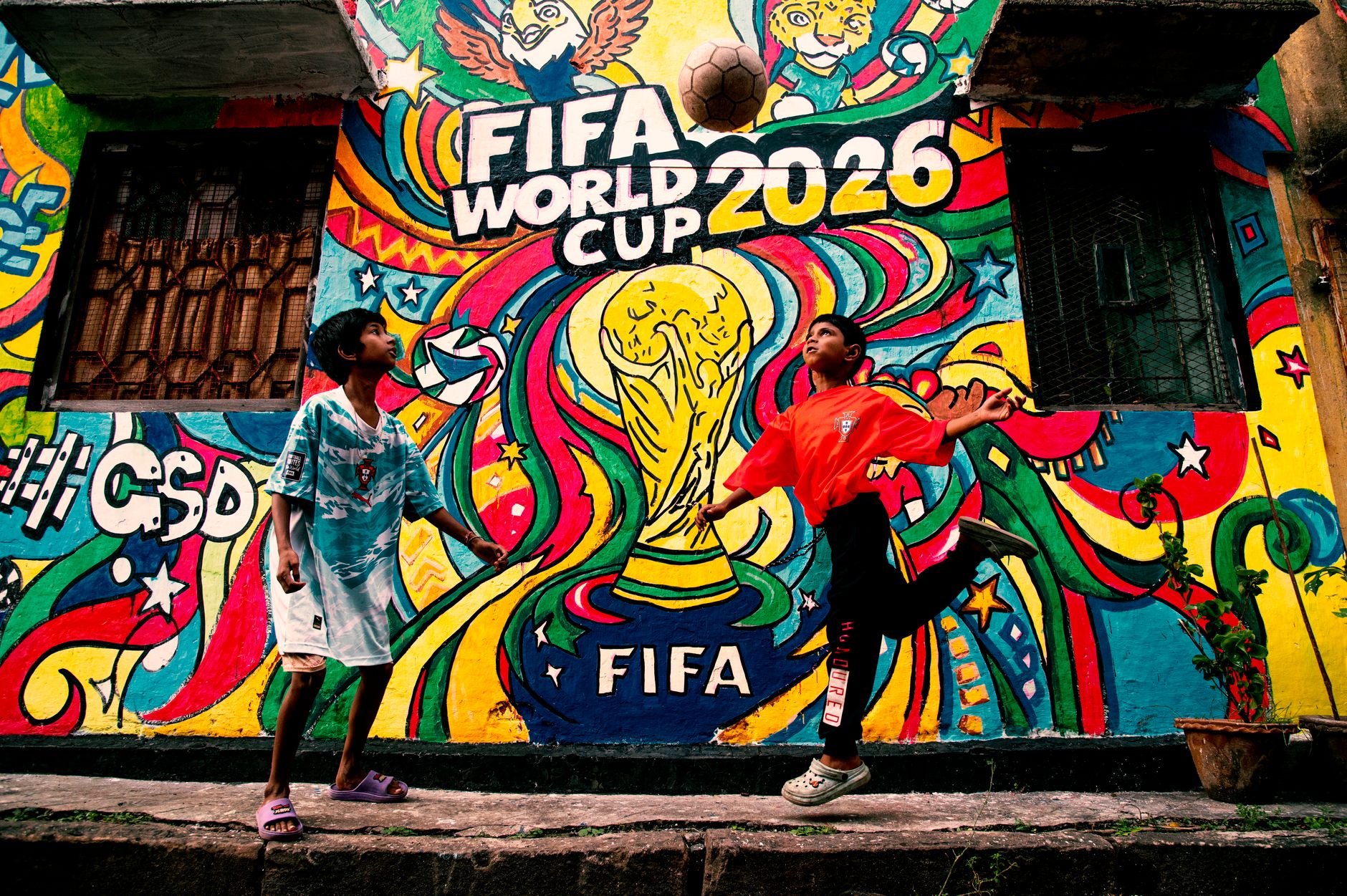
Photo by Anirban Das on Pexels
Myth 1: Is the 48-team 2026 World Cup automatically less competitive — debunked
No, the 48-team 2026 World Cup is not automatically less competitive; it changes where competitiveness appears. The group stage may include more uneven matchups, but the 32-team knockout phase increases variance, tactical risk, and upset potential from the Round of 32 onward.
The common claim is understandable because the tournament expands from 32 teams in Qatar 2022 to 48 teams in 2026, which means more debutants and more teams from confederations outside UEFA and CONMEBOL. However, FIFA’s final format still places four teams in each group, reducing the risk of collusion that affected earlier three-team proposals. According to FIFA, the 2026 edition will feature 104 matches, making depth management and tactical rotation more important than in previous World Cups. It is worth noting that a broader field does not only dilute quality; it also exposes more styles, from CAF transitional sides to AFC pressing teams and CONCACAF home-region specialists.
For bettors and analysts, the key is to separate team quality from matchup quality. A lower-ranked nation may still create value if it faces a possession-heavy opponent vulnerable to counterattacks, set pieces, or heat fatigue. Coach’s Corner treats the expanded format as a data problem rather than a narrative problem: 1. assess opponent style, 2. measure travel and rest, 3. compare market odds with implied probability, and 4. avoid assuming FIFA ranking equals tournament readiness. To learn more about format effects and tactical mismatches, check out our [Internal Link: 2026 World Cup format guide].
Myth 2: Does home-region advantage guarantee CONCACAF success — partially true
Home-region advantage helps the United States, Mexico, and Canada, but it does not guarantee deep runs. Familiar climate, crowd support, and travel logistics matter, yet knockout success still depends on squad depth, finishing efficiency, defensive structure, and opponent draw.
The 2026 World Cup is unusual because three host nations share the event across a continent-sized footprint. The United States will host the majority of matches, Mexico will stage games in Mexico City, Monterrey, and Guadalajara, while Canada will host in Toronto and Vancouver. The historical record supports some host advantage: France won in 1998, South Korea reached the 2002 semifinal as co-host, and Russia reached the 2018 quarterfinal. Still, this advantage is not uniform. Playing in Mexico City’s altitude is different from playing in Seattle’s climate, and a team based in the eastern United States may not benefit equally from a match in Los Angeles.

Photo by Sinan KRIYA on Pexels
A more precise approach is to quantify the advantage in layers. First, measure travel distance between group venues because recovery days are finite and 104 matches compress attention across the calendar. Second, evaluate crowd composition because a “home” venue may still include heavy support for Argentina, Brazil, England, or Mexico. Third, adjust for climate, particularly afternoon kickoffs in cities such as Dallas, Houston, Miami, and Monterrey. The National Weather Service does not forecast tournament conditions years in advance, but historical June and July averages show that heat and humidity can materially affect tempo, substitutions, and late-match goals.
If you are comparing host-nation futures, use the same discipline you would use for club football models: price, path, and probability must agree. A sentimental pick on the United States Men’s National Team, Canada men’s national team, or Mexico national team can be fun, but it should not replace bracket-path analysis. Coach’s Corner will monitor group allocations, venue sequences, and player workload once the official draw is complete. See the details in our tournament coverage hub.
Myth 3: Are early futures odds the smartest 2026 World Cup bet — flat-out false
Early futures odds are not automatically smart because they often include brand premiums, uncertainty, and limited squad information. Value exists only when the implied probability is lower than a realistic projection after accounting for injuries, draw path, format, and market margin.
This myth survives because futures markets feel clean: pick France, Argentina, Brazil, England, Spain, or Germany, then wait for the tournament. The problem is that the market usually prices famous teams efficiently or even expensively, especially when public betting demand increases. A team listed at 8.00 decimal odds implies roughly 12.5 percent before bookmaker margin, but that number may be poor value if the team’s realistic tournament win probability is closer to 9 percent. The reverse can also happen with less fashionable contenders that have elite defensive metrics, strong goalkeeper performance, and a favorable bracket.
The operational detail many casual bettors miss is liquidity timing. In many regulated markets, World Cup futures limits are lower long before the draw and increase as squads, venues, and matchups become clearer. That means early prices can move sharply after the group draw, injury reports, or UEFA and CONMEBOL qualifying results. It is worth noting that some sportsbooks adjust outright prices faster than derivative markets such as group winner, top scorer, or team to reach quarterfinals. Coach’s Corner often finds more useful discussion in those secondary markets because they isolate narrower assumptions. For related reading, use our [Internal Link: football betting odds explained].
The key is bankroll structure. Consider these practical rules before placing a 2026 World Cup football wager:
- Do not stake more on futures than you can comfortably lock for months.
- Compare at least three regulated sportsbooks before accepting a price.
- Convert odds into implied probability before deciding if a bet has value.
- Track injury news from clubs such as Manchester City, Real Madrid, Bayern Munich, Inter Milan, and Paris Saint-Germain.
- Treat promotional boosts as offers to evaluate, not automatic advantages.
What actually works
What works is a layered evaluation method that combines tournament structure, tactical matchup analysis, player workload, and market discipline. The 2026 World Cup rewards readers who compare data points rather than following rankings, narratives, or isolated star-player headlines.
A useful 2026 World Cup football model starts with the expanded format. Twelve groups of four create more third-place qualification scenarios, which means teams may qualify without dominating possession or goal difference. This matters for betting because conservative teams can become more viable in group-stage markets, while aggressive teams may become volatile in both totals and handicap lines. The Wikipedia overview of the 2026 FIFA World Cup summarizes the host structure and expansion, but applied analysis requires a second layer: venue sequencing, travel distance, and rest gaps. “The tournament will be jointly hosted by 16 cities in three North American countries,” according to FIFA’s public tournament materials, a structure that makes logistics unusually important.

Photo by Lukas Blazek on Pexels
Two specific insights are worth highlighting because they are often missed in generic previews. First, the Round of 32 changes incentive design: group winners may no longer receive the same psychological advantage they did in a 16-team knockout bracket, because an extra elimination match increases injury, card, and variance exposure. Second, altitude and humidity can interact with pressing intensity; a team built on high regains may underperform if it must press in Mexico City or a humid southern U.S. venue after long travel. These are not reasons to avoid favorites, but they are reasons to adjust totals, live-betting assumptions, and late-goal expectations. For tactical context, visit our [Internal Link: World Cup team tactics analysis].
A practical pre-tournament checklist should include:
- Squad age profile and minutes played in the 2025-26 club season.
- Goalkeeper shot-stopping data, not just clean-sheet totals.
- Set-piece efficiency on both attacking and defensive phases.
- Travel sequence from group base to match venues.
- Manager history in knockout tournaments.
- Market margin across outright, group, goalscorer, and match lines.
If you want disciplined previews that combine team news, odds movement, and tactical structure, Coach’s Corner can help you follow the market with less noise.
What to ignore
Ignore analysis that treats the 2026 World Cup as a simple extension of Qatar 2022, because the format, geography, and match volume are different. Also ignore predictions that rely only on national reputation, social media hype, or a single superstar’s club form.
There are several weak signals that look persuasive but rarely survive scrutiny. FIFA ranking can be useful as a broad reference, yet it does not measure venue fit, tactical matchup, or knockout resilience. Golden generation narratives can also mislead because a team may have elite attackers and still lack full-back depth, ball-winning midfielders, or penalty-box defending. Similarly, friendly results in March 2026 may not translate to June and July because player availability, motivation, and tactical experimentation differ. The key is not to reject all narratives; the key is to demand that every narrative connect to measurable conditions.
Photo by Omar Ramadan on Pexels
Betting readers should also ignore any claim that one “locked” strategy can beat the entire tournament. Live betting, outright futures, prop markets, and match handicaps each have different risk profiles. A live bet may benefit from real-time tactical observation, but it can suffer from poor price movement after a red card or injury. An outright bet can secure early value, but it ties up capital and depends heavily on the draw. Coach’s Corner evaluates these trade-offs openly because regulated gambling content should help readers think clearly, not chase certainty. For responsible play, set a budget before the tournament and avoid increasing stakes after losses.
A final filter is source quality. Prefer official FIFA information, national-team announcements, reputable media, and transparent betting analysis over anonymous social posts. When a claim appears, ask four questions: Who benefits if I believe this, what evidence supports it, has the price already moved, and does the claim affect probability or just emotion? That framework is simple, but it prevents many expensive mistakes. To keep learning, see our [Internal Link: responsible World Cup betting checklist].
The 2026 World Cup football cycle will reward patience more than noise. The expanded field creates more matches, more markets, and more uncertainty, but uncertainty is not the same as opportunity unless it is priced incorrectly. Coach’s Corner will continue publishing match predictions, team tactics, player stats, and tournament coverage as the draw, squads, and venue assignments clarify. The sensible reader should build a shortlist, wait for confirmed information, compare prices, and treat every bet as a probability decision rather than a loyalty test.
Ready to follow the 2026 World Cup with sharper context and daily analysis from Coach’s Corner?
Frequently Asked Questions
Q: What is 2026 World Cup football?
A: 2026 World Cup football is the FIFA men’s international tournament hosted by the United States, Canada, and Mexico from June 11 to July 19, 2026. It will include 48 national teams and 104 matches, making it the largest FIFA World Cup to date. The tournament is especially important for fans and bettors because the expanded format changes qualification paths, knockout probabilities, and market pricing.
Q: How should I start analyzing 2026 World Cup predictions?
A: Start by reviewing the tournament format, team strength, venue schedule, and likely betting market movement. A practical first step is to compare group draw difficulty, travel distance, squad depth, and recent competitive results rather than relying only on FIFA ranking. Coach’s Corner focuses on these variables through daily predictions, tactical notes, and player-stat updates.
Q: What is the difference between betting on futures and match odds?
A: Futures bets predict long-term outcomes, while match odds focus on one specific game. A futures bet might involve France to win the 2026 World Cup or Brazil to reach the final, while match odds cover results, totals, handicaps, or player props for a single fixture. Futures can offer early value but tie up bankroll longer and are more exposed to injuries and draw changes.
Q: Why do 2026 World Cup predictions fail?
A: Many 2026 World Cup predictions fail because they overvalue reputation and undervalue format, travel, and tactical matchups. A strong team on paper can struggle with heat, altitude, fixture congestion, or an awkward Round of 32 opponent. To reduce errors, compare implied probability with realistic scenarios and update assumptions after the official draw and squad announcements.
Q: How much does it cost to follow 2026 World Cup betting analysis?
A: The cost depends on the platform, but readers can access many previews, statistics, and public odds comparisons for free. Paid tools may charge for advanced models, alerts, or proprietary projections, while sportsbooks may require account verification before displaying full markets. Always use regulated operators in your jurisdiction and set a fixed betting budget before the tournament begins.
Q: Is the 2026 World Cup format good for underdog teams?
A: The 2026 format can help underdog teams because more third-place qualification routes and a Round of 32 increase variance. However, underdogs still need defensive organization, set-piece quality, and efficient transitions to survive beyond the group stage. The best approach is to identify specific matchup advantages rather than betting every outsider blindly.